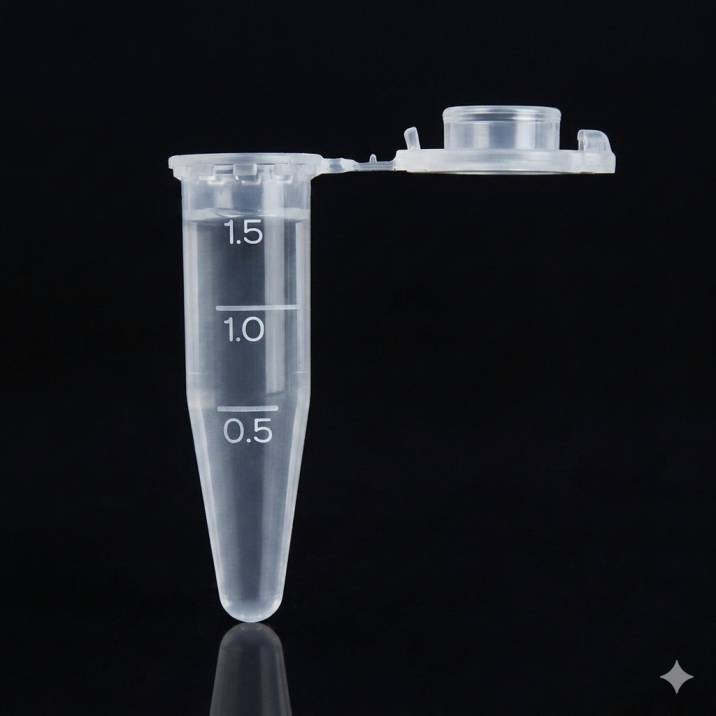
Description
Available Sizes and Capacities
Common Eppendorf Tube Sizes
- 0.5 ml
- 1.5 ml
- 2.0 ml
Packaging Options
- Pack of 100
- Pack of 500
- Bulk laboratory packaging
Applications and Usage
Molecular Biology Laboratories
Used for DNA, RNA, and protein sample handling.
Diagnostic Laboratories
Supports sample preparation and clinical testing.
Pharmaceutical Industry
Used in formulation development and analytical testing.
Research Laboratories
Suitable for centrifugation, mixing, and sample storage.
Educational Laboratories
Used in biology and biotechnology practical experiments.
Biotechnology Applications
Supports microbiology and cell culture workflows.
Benefits of Using Eppendorf Tubes
- Secure and leak-resistant sample storage
- Compatible with laboratory centrifuges
- Reduces contamination risk
- Durable and chemical resistant material
- Suitable for research and diagnostic applications
- Lightweight and easy to handle
- Available in multiple capacities
- Essential laboratory consumable
Technical Specifications
| Specification | Details |
|---|---|
| Product Type | Eppendorf Centrifuge Tube |
| Material | Polypropylene (PP) |
| Capacities | 0.5 ml / 1.5 ml / 2.0 ml |
| Cap Type | Snap Cap |
| Sterility | Sterile / Non-Sterile |
| Usage | Sample Storage & Centrifugation |
| Chemical Resistance | Yes |
| Temperature Resistance | Suitable for Laboratory Conditions |
| Reusability | Disposable / Limited Reuse |
Why Eppendorf Tubes Are Important in Laboratories
Eppendorf tubes are essential for accurate sample handling and storage in modern laboratories. Their secure sealing system and centrifuge compatibility help maintain sample quality and improve workflow efficiency in scientific research and diagnostics.
Common Laboratory Uses
- DNA and RNA extraction
- Sample centrifugation
- Reagent preparation
- Clinical diagnostics
- Sample storage
- Biotechnology experiments
- Educational laboratory work
FAQ
What is an Eppendorf centrifuge tube used for?
It is used for sample storage, centrifugation, mixing, and laboratory research applications.
What material are Eppendorf tubes made from?
Most Eppendorf tubes are made from polypropylene (PP).
Are Eppendorf tubes sterile?
They are available in both sterile and non-sterile versions.
What sizes are available
Common sizes include 0.5 ml, 1.5 ml, and 2.0 ml.
Can Eppendorf tubes be used in centrifuges?
Yes, they are specifically designed for centrifuge applications.
Are the caps leak resistant?
Yes, the snap caps are designed to minimize leakage and contamination.
Where are Eppendorf tubes commonly used?
They are widely used in research labs, diagnostic centers, biotech facilities, and educational institutions.

Reviews
There are no reviews yet.